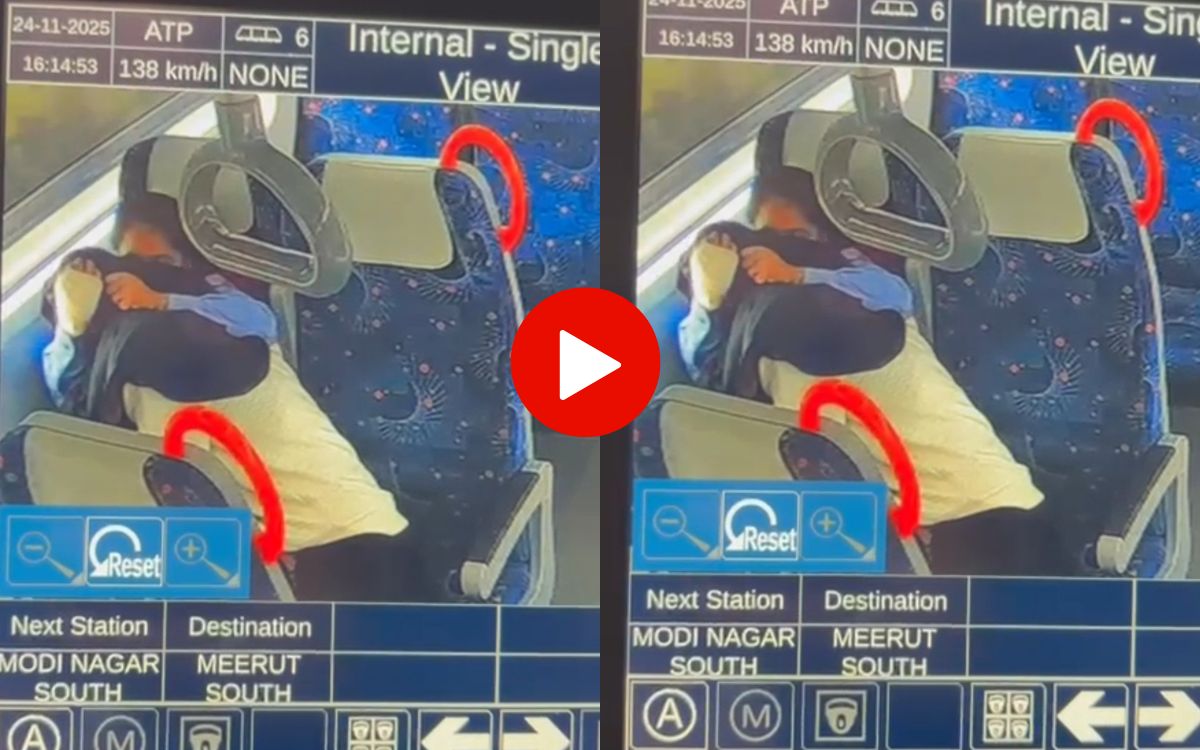
Ghaziabad : India’s most advanced rapid rail service, the Namo Bharat Train (RRTS), is once again in the spotlight. This time, however, the reason is neither its speed nor its modern infrastructure. A viral obscene video allegedly recorded inside a premium coach has triggered widespread outrage, administrative action, and a police investigation.
What began as a short clip on social media quickly escalated into a serious matter involving public decency, passenger privacy, and misuse of surveillance systems. The Ghaziabad Police have registered an FIR, while strict action has been taken against a train operator accused of leaking CCTV footage.
Obscene Video Controversy in Namo Bharat Train
According to verified media reports and police statements, the incident occurred on the Ghaziabad–Meerut Namo Bharat route. A video surfaced on social media showing a young man and woman in an objectionable position inside the train.
The clip spread rapidly across platforms such as WhatsApp, X (formerly Twitter), and Instagram. Within hours, it drew public attention and raised uncomfortable questions about behavior in public transport and digital responsibility.
As soon as authorities became aware of the video, local police and NCRTC officials initiated an immediate investigation.
Why This Case Is Being Taken Seriously
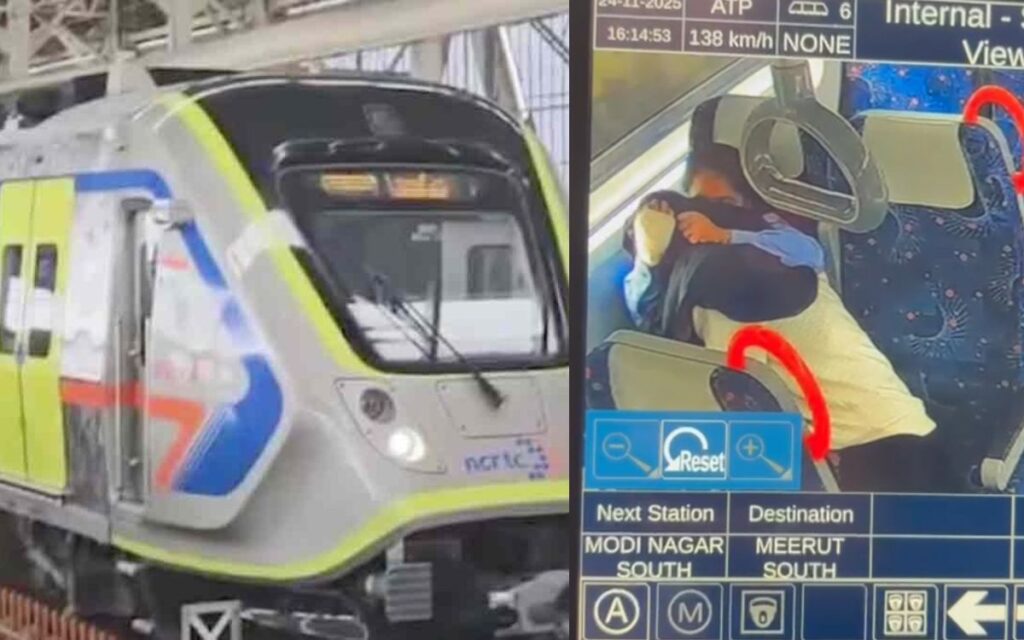
The Namo Bharat Train is not an ordinary commuter service. Authorities designed it as a high-security, premium public transport system meant to represent the future of urban mobility in India.
That context makes the incident more serious for three clear reasons:
- The train is a public space, not a private setting
- Passengers of all age groups travel in these coaches
- Premium facilities do not imply relaxed rules
In simple terms, paying more for comfort does not mean paying less attention to responsibility.
FIR Registered: Legal Action Under IPC and IT Act
The Ghaziabad Police registered an FIR after preliminary verification of the video. Officials confirmed that the case includes provisions under:
- Public obscenity in a public place
- Violation of individual privacy
- Electronic circulation of objectionable material
Investigators are currently working to identify the individuals seen in the video and trace the original source of the clip.
Police officials clarified that both the act inside the train and the act of spreading the video fall under legal scrutiny.
Major Twist: Operator Accused of Leaking CCTV Footage
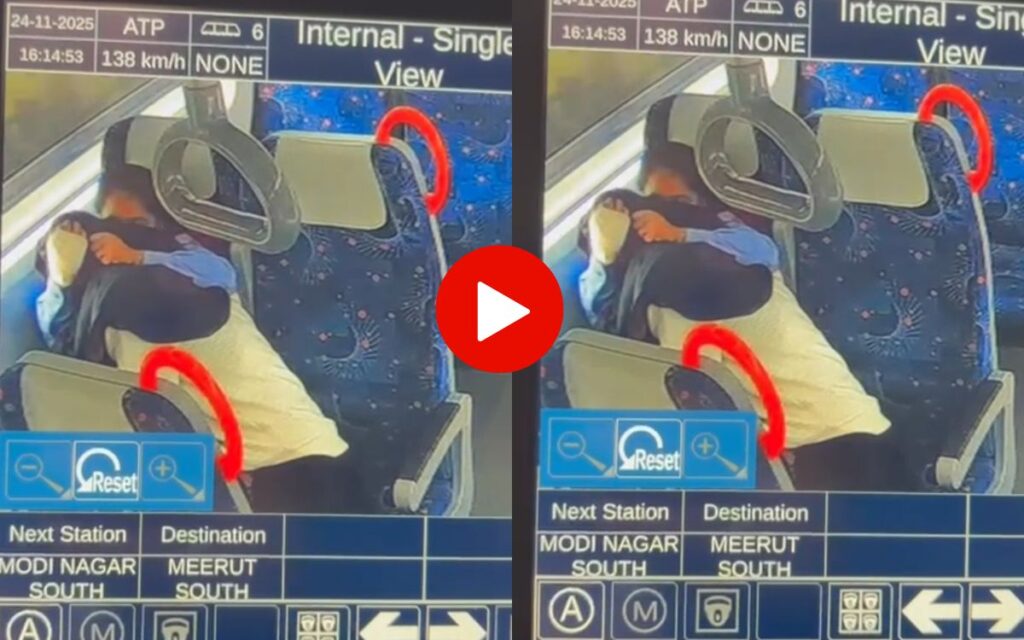
The case took a decisive turn when investigators discovered that the viral video was allegedly recorded from the train’s CCTV system.
According to official findings: A train operator allegedly recorded the footage from surveillance monitors and shared it externally. This revelation shifted the focus from only public behavior to institutional accountability and data misuse.
Action Taken Against the Operator
NCRTC authorities acted swiftly after the allegation surfaced. They treated the matter as a serious breach of security protocols and passenger confidentiality.
Confirmed actions include:
- Immediate suspension / removal from duty
- Initiation of departmental inquiry
- Cooperation with police for criminal proceedings
Officials emphasized that CCTV systems exist solely for passenger safety, not for content creation or social media circulation.
CCTV Surveillance vs Passenger Privacy
This incident has reignited an important debate:
How do authorities balance security and privacy in public transport?
CCTV cameras in Namo Bharat trains serve specific purposes:
- Crime prevention
- Passenger safety
- Emergency evidence collection
They do not grant anyone the right to record, extract, or share footage without authorization. Indian law treats unauthorized sharing of surveillance content as a punishable offense.
This case highlights why strict access control and accountability around surveillance systems matter.
Official Warning From Authorities
Following the incident, both police and railway authorities issued clear warnings:
- Sharing CCTV footage is a criminal offense
- Forwarding viral clips can also attract legal action
- Social media virality does not excuse illegal behavior
Officials urged passengers to report inappropriate activity, not record or distribute it.
Social Media Reaction: Divided but Intense
The incident sparked widespread debate online.
The other side questions
Does viral shaming violate personal dignity, even when wrongdoing occurs?
Legal experts and social commentators agree on one point—
Justice should come from law, not online trials.
While accountability matters, unchecked online sharing often causes irreversible harm.
Impact on the Image of Namo Bharat Train
The Namo Bharat project represents India’s next-generation transport vision. Authorities understand that such incidents can affect public trust.
That explains the swift response:
- Zero tolerance for misconduct
- Immediate disciplinary action
- Transparent communication
By acting quickly, officials sent a strong signal that the system remains secure and rule-driven.
Key Takeaways From the Incident
This case delivers multiple lessons:
- Public spaces require responsible conduct
- Passenger privacy is legally protected
- CCTV misuse carries serious consequences
- Social media sharing is not harmless entertainment
Technology evolves fast, but ethical responsibility must keep pace.
Conclusion: More Than a Viral Video
The Namo Bharat Train obscene video controversy is not just another trending clip. It is a reminder that:
- Public dignity matters
- Privacy violations are crimes
- Digital actions have real-world consequences
The firm response from police and authorities reinforces a simple truth – Rules apply equally to behavior inside the train and actions behind a screen.
As India upgrades its infrastructure, society must also upgrade its sense of responsibility.
READ MORE